 Reviews

 Proudly American
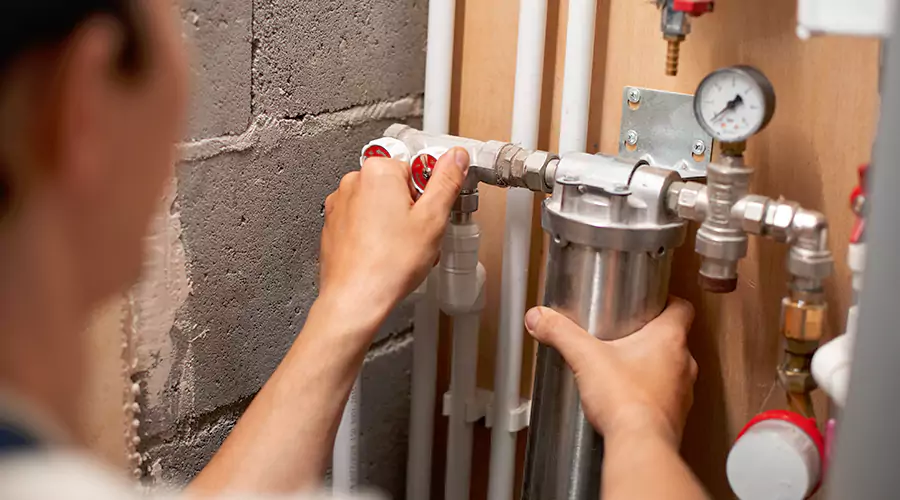
Water pressure affects your shower, faucets, and appliances. Low pressure makes everything slow, while high pressure can strain pipes, valves, and hoses and may require water leak detection to identify hidden issues. The good news is you can test your home’s water pressure quickly with an inexpensive gauge.
What Water Pressure Is (and What’s Typical)?
Home water pressure is measured in PSI (pounds per square inch).
A practical target range for many homes is:
- 40 to 60 PSI: common “sweet spot”
- Below 40 PSI: often feels weak
- Above 80 PSI: often too high and can raise leak risk
Pressure can change during the day based on local demand.
What You Need?
Water pressure gauge
A basic water pressure gauge screws onto a standard hose-thread connection, like an outdoor spigot. If you can, buy one with a peak indicator needle so you can detect pressure spikes.
Quick checklist
- Standard garden-hose threads
- Range up to 160 to 200 PSI
- Optional: peak indicator
How to Test Water Pressure at an Outdoor Spigot?
This is the simplest and usually most accurate test because it is often close to where water enters the home.
1) Stop water use inside the house
For a clean reading, make sure no one is using showers, faucets, toilets, or appliances that draw water.
2) Attach the gauge
Choose an outdoor spigot in good condition. Screw the gauge on by hand until snug.
3) Turn the spigot fully on
Open the spigot all the way and let the needle settle.
4) Read and record the PSI
That number is your static pressure (pressure when water is not flowing inside).
Tip: Test twice, morning and evening. Big swings can point to a regulator or supply issue.
No Outdoor Spigot? Here Are Two Alternatives
If you cannot use an outdoor hose bib, you can test at:
- Laundry or utility sink faucet with hose threads
- Water heater drain valve if it is accessible
Use a towel for small drips, and avoid forcing old valves. If a valve looks corroded or has not been moved in years, choose another test point.
How to Check for Pressure Spikes?
Some homes test fine during the day but spike late at night. That can happen if city pressure rises or if a pressure-reducing valve is failing.
- Use a peak-reading gauge
- Attach the gauge and turn the spigot fully on.
- Reset the peak needle (if your gauge has one).
- Leave it for several hours, ideally overnight.
- Read the highest PSI recorded.
If the peak reading goes above 80 PSI, it is worth investigating.
What Your Results Mean and What to Do?
If you read 40 to 60 PSI
You are in a solid range. If flow still feels weak, check for local restrictions:
- Clogged faucet aerators
- Mineral buildup in showerheads
- Partially closed shutoff valves under sinks or toilets
If you read below 40 PSI
Low pressure is usually caused by a restriction, a valve not fully open, or aging plumbing.
Quick checks
- Make sure the main shutoff valve is fully open
- Replace any whole-house filter cartridge if overdue
- Clean aerators and showerheads
- Compare readings: outdoor spigot vs. an indoor point (like a laundry sink)
Common causes
- Partially closed main or meter valve
- Pressure-reducing valve set too low or failing
- Mineral buildup or pipe corrosion
- Leaks (including underground service line leaks)
If pressure drops suddenly and you hear water running when everything is off, treat it as urgent.
If you read above 80 PSI
High pressure can cause dripping fixtures, stressed supply lines, and premature appliance wear.
Typical fix
- Adjust or replace the pressure-reducing valve (PRV), if your home has one
- Install a PRV if your home does not
PRVs are often located near where the main line enters the home, sometimes close to the meter or utility area.
Water Pressure vs. Water Flow (Don’t Mix Them Up)
Pressure (PSI) is force in the pipes. Flow is how much water you actually get. You can have normal PSI but poor flow if something narrows the path, like a clogged aerator or buildup in a valve.
When to Call a Plumber?
Call a pro if:
- Pressure is consistently above 80 PSI
- Pressure stays very low after basic checks
- Pressure swings a lot from morning to evening
- You suspect a failing PRV or hidden leak
Quick FAQ
How often should you test water pressure?
Once or twice per year is a good habit, plus anytime you notice changes in shower strength or new leaks.
Should you test while water is running?
For this guide, focus on static pressure, so test when nothing is using water. If you want deeper diagnostics, a plumber can measure flowing pressure and check for restrictions.
Final Takeaway
Testing your home’s water pressure is easy and can prevent damage. Use a gauge, record your PSI, and watch for overnight spikes. If your numbers are outside a healthy range, start with simple fixes, then get professional help for regulator or supply-line problems.